Love Without Limits: The Joyful Truth About Our Polyamory Journey
The Truth About How This Polyamory Journey Started
Here’s what didn’t happen: We didn’t sit down one day, read a bunch of books about ethical non-monogamy, and make a rational decision to open our relationship. That’s not how this polyamory journey started.
Here’s what did happen: One of us fell for someone else. And instead of pretending it wasn’t happening, instead of shutting it down, instead of choosing between “be monogamous” or “end everything”—we asked: What if there’s another way?
This isn’t a cute origin story. It’s messy, it’s real, and it’s the truth. This is our polyamory journey—exactly as it happened.
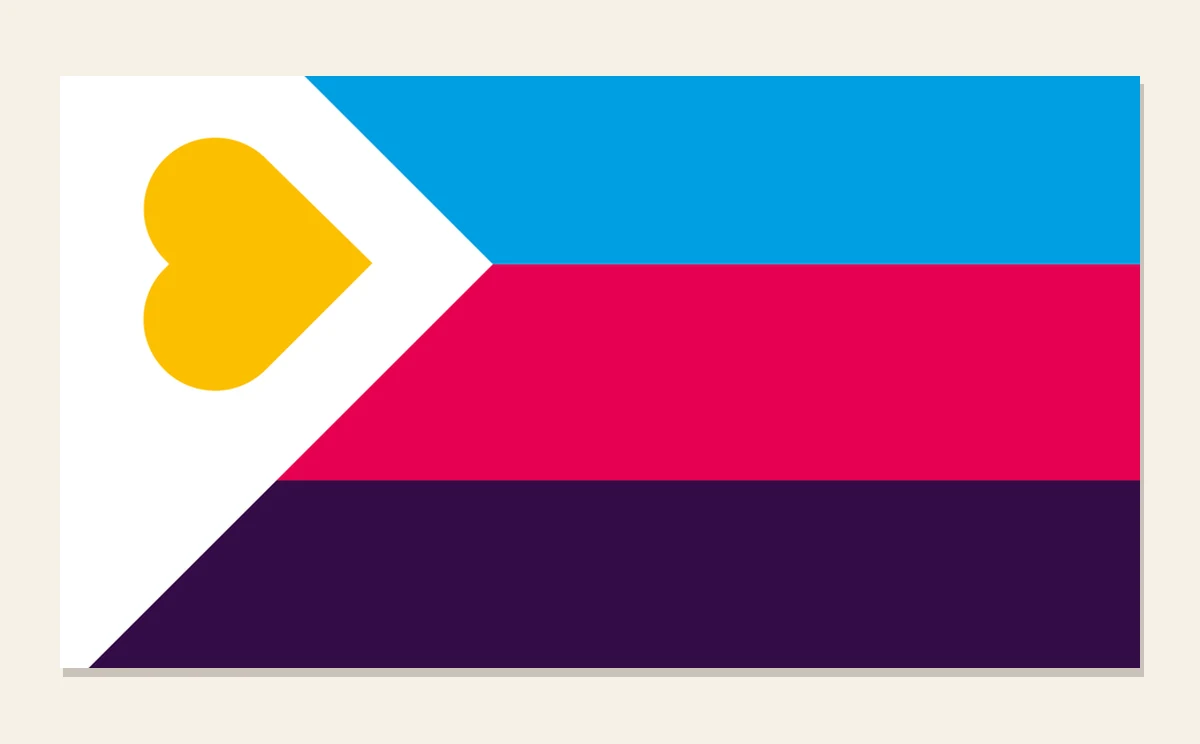
What Monogamy Didn’t Give Us
We loved each other. We still do. But somewhere along the way, monogamy started feeling less like a choice and more like a cage.
The things we couldn’t say out loud:
- “I’m attracted to other people, and I don’t know what to do with that.”
- “I love you, but I’m not sure you can be everything I need.”
- “What if love isn’t a finite resource?”
- “What if I’m not broken for wanting more?”
We’d been raised on the same script everyone gets: you find The One, you commit, you close the door. But anything outside of that wasn’t just discouraged—it was evidence of failure. If you wanted someone else, it meant your relationship was broken. If you loved someone else, it meant you’d never really loved your partner in the first place.
We didn’t believe that. But we didn’t have another model.
The moments that stuck with us:
One of us remembers sitting at a coffee shop, watching someone across the room. Not flirting. Not planning anything. Just… noticing. And then immediately feeling guilty. Why am I looking? What does this mean? Am I unhappy?
Meanwhile, the other remembers being asked, early in our relationship: “Do you think you could ever love more than one person?” And answering, automatically: “No, of course not.” And wondering, later, if that was true—or if it was just the answer we’d been taught to give.
Still, monogamy gave us a lot: stability, clarity, a shared life. But it also asked us to pretend parts of ourselves didn’t exist. And that pretending started to cost us.
The First Crack
The first time one of us said out loud, “I think I might be capable of loving more than one person,” the room got very quiet.
This wasn’t a theoretical conversation anymore. There was a specific person. Specific feelings. Specific consequences.
What we were afraid of:
- That admitting this would end everything
- That we’d be judged as cheaters, as selfish, as incapable of commitment
- That we’d try this and it would destroy us
- That we’d not try it and spend the rest of our lives wondering
What we decided:
We would talk. Honestly. Without pretending. We would read, find other people who’d done this, and go slowly. And we would prioritize each other—even as we opened up.
In the end, it wasn’t a clean decision. It wasn’t unanimous at first. One of us was more curious. The other was more cautious. We met in the middle.
Our Polyamory Journey Begins: The Early Days Were Hard
We want to be honest about this part. The beginning was not magical. It was terrifying.
The things we didn’t anticipate:
- How much jealousy would come up—not just about sex, but about time, attention, intimacy
- How hard it would be to find language for what we were feeling
- How much reassurance we’d need, and how to ask for it without sounding needy
- How to tell other people what we were doing (or whether to tell them at all)
- How to navigate practical stuff: sleep schedules, calendar conflicts, sexual health
The first time one of us went on a date:
Neither of us slept well. One of us was out, trying to be present with someone new, feeling guilty and excited and anxious all at once. The other was home, staring at the ceiling, imagining worst-case scenarios, checking their phone, trying not to check their phone.
When the date came home, we didn’t have sex. We didn’t even really talk about it. Instead, we just lay next to each other, both relieved that the world hadn’t ended, both uncertain about what came next.
That’s the part nobody puts in the highlight reel. Because the first year of polyamory was less “liberated love” and more “constant emotional triage.”
But we kept going.
The Moments That Made Our Polyamory Journey Worth It
It wasn’t all hard. There were moments—small at first, then bigger—when we realized this might actually work.
The moment one of us felt compersion:
It wasn’t dramatic. One of us came home from a date, glowing. Not in a “I got away with something” way. In a “I had a good experience and I’m still fully here with you” way. And the other one, instead of feeling threatened, felt… happy. Genuinely happy. Their joy didn’t subtract from ours. It added to it.
We didn’t feel compersion all the time. In fact, we still don’t. But that first time proved it was possible.
The moment we realized we were still choosing each other:
Opening up didn’t mean we loved each other less. It meant we were choosing each other differently. Not out of obligation. Not because we’d closed off other options. But because, among all the possibilities, we kept coming back to each other.
That felt more honest than monogamy ever had.
The moment we stopped apologizing:
Early on, we’d say things like: “I’m sorry I’m going on this date.” “I’m sorry this is hard.” “I’m sorry I’m not enough.”
Somewhere along the way, we stopped apologizing for existing. For having needs. For loving in the way that fit us.
And that shift changed everything.
Why This Polyamory Journey Fits Us
People ask us sometimes: “Why polyamory? Why not just monogamy, or just being single?”
Here’s our answer:
Because it’s honest.
We don’t have to pretend we don’t notice other people, or that one person can meet every need, or that love is finite. We can say: “I love you. And I might love someone else too. And those things aren’t in conflict.”
Because it requires us to grow.
Polyamory doesn’t let you coast. Because there are no default scripts to rely on, you have to communicate. You have to examine your insecurities. You have to learn to sit with discomfort. And you have to become a better version of yourself—not for anyone else, but because the structure demands it.
We’re better people for having done this. Not because polyamory is morally superior. But because it asked us to be intentional.
Because it gives us more love, not less.
This sounds cheesy. We know. But it’s true. Loving other people hasn’t diminished what we have. It’s expanded it. We come back to each other with more joy, more perspective, more gratitude.
Because it fits who we actually are.
Not who we were told we should be. Not who we thought we needed to be to be loved. But who we are. Messy, complicated, capable of multiple kinds of love.
What We’d Tell Our Past Selves
If we could go back to that first conversation—the one where we admitted out loud that monogamy wasn’t working—here’s what we’d say:
“You’re not broken.”
Wanting more than one person doesn’t mean you’re incapable of commitment. It doesn’t mean you don’t love your partner. It means you’re human.
“Go slower than you think you need to.”
We rushed. It felt like we had to figure everything out immediately. We didn’t. You can take your time. You can pause. And you can say “not yet.”
“Read everything. Then trust your own experience more than the books.”
We read so much. Some of it helped. Some of it made us feel like we were doing it wrong. But the truth is that there’s no one right way. Your polycule gets to decide what works for you.
“Find community.”
We tried to do this alone at first. Big mistake. Finding other poly people—online, locally, anywhere—made us feel less like freaks and more like part of something.
“It gets easier.”
The first year was hard. The second was better. The third, better still. Not because the challenges disappeared. But because we got better at meeting them.
The Things We Still Struggle With
We don’t want to paint this polyamory journey as some kind of success story where we’ve figured it all out. We haven’t.
What’s still hard:
- Time management. Always time management.
- Knowing when to share information and when to respect privacy
- Navigating other people’s judgments (family, friends, coworkers)
- Remembering that we’re allowed to say no—to dates, to arrangements, to things that don’t feel right
- Not comparing our relationships to other people’s
What we’re still learning:
- How to rest without feeling guilty
- How to ask for what we need without apologizing
- How to trust that love is abundant, even when it doesn’t feel like it
- How to be patient with ourselves and each other
We’re not experts. We’re just people who chose this life and are trying to live it honestly.
Why We’re Writing This
We didn’t start this blog to convince anyone to be polyamorous. This isn’t for everyone. It’s not morally superior. It’s not a relationship panacea.
We’re writing because we needed to see stories like this when our own polyamory journey was starting out. Messy, honest, not-perfect stories. Stories that said: You can figure this out. You’re not alone. It gets better.
If you’re reading this and you’re curious about polyamory: we see you. If you’re reading this and you’re in the thick of it, then we see you too. And if you’re reading this and thinking, “This will never be me”—that’s okay. This life isn’t for everyone. But you deserve relationships that fit you, whatever that looks like.
For a broader overview of the terminology and history, Psychology Today keeps a useful primer.
The Short Version
Here’s the shortest version of this polyamory journey:
We loved each other, and we realized love could be bigger. We chose to find out how big. It was hard. It was worth it. We’re still choosing each other. We’re still choosing this.
That’s it. That’s the whole thing.
Want to go deeper?
- Once you start this journey, you’ll need tools for hard conversations. Read our guide on polyamory communication scripts.
- Jealousy will come up. We’ve been there. Check out our post on jealousy in polyamory tools that actually work.
- Still figuring out where the lines are? Read our post on boundaries in polyamorous relationships.
Thanks for reading. Every polyamory journey looks different—if this resonated, share it with someone who needs to hear it. And if you have your own story, we’d love to hear it.